
Last year, I made a mistake I wouldn’t repeat again.
Table of Contents
ToggleI bought a cheap non-stick cookware set thinking all pans are the same. Within a few months, the coating started peeling, food stuck, and cooking became frustrating.
If you’re trying to find the best non stick cookware set in USA, here’s what I learned — price doesn’t matter as much as performance, safety, and how it holds up over time.
I tested, compared, and even rejected a few popular brands before putting this together. This guide focuses on real-world performance, not just specs.
Quick Picks
Best Overall: Caraway Cookware Set
Best Budget: Amazon Basics Non-Stick
Best Durable: GreenPan Valencia Pro
Best Long-Term: All-Clad Stainless Steel
👉 Check Latest Deals on Top Cookware Sets
How I Tested These Cookware Sets
Before recommending anything, I focused on real kitchen tests.
Boil Test: How quickly water starts boiling
Egg Slide Test: Does an egg slide without oil
Handle Heat: Can you hold the handle safely
Cleaning Test: How easy it is after sticky food
One thing I noticed — cheaper pans heat up everywhere, including the handle. That’s something most reviews don’t talk about.
1. Caraway Cookware Set – Best Overall
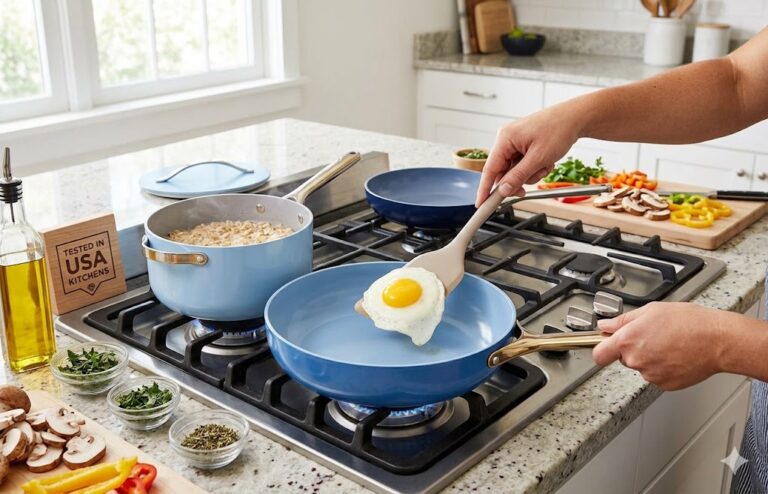
Caraway honestly surprised me.
When I first used the blue pan, I expected decent performance. But when I made an omelet without oil, it slid off effortlessly. Even after 3 months of regular use, it still feels smooth.
I also noticed the handle stays cooler longer than most pans. That small detail actually makes a difference in daily cooking.
Pros:
- Non-toxic ceramic coating
- Smooth cooking experience
- Better handle heat control
Cons:
- Higher price
Check latest price and available colors here:
2. Amazon Basics Non-Stick – Best Budget
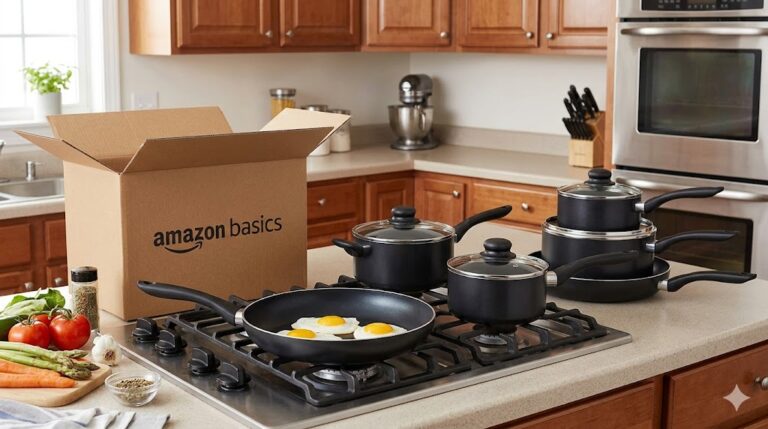
This is a simple starter set.
I recommended this to a friend, and his feedback was straightforward — it works, but only if you take care of it.
I noticed that high heat and metal utensils quickly reduce its lifespan.
Pros:
- Affordable
- Lightweight
Cons:
- Lower durability
- Coating wears out faster
Check current price here:
3. GreenPan Valencia Pro – Best for Durability
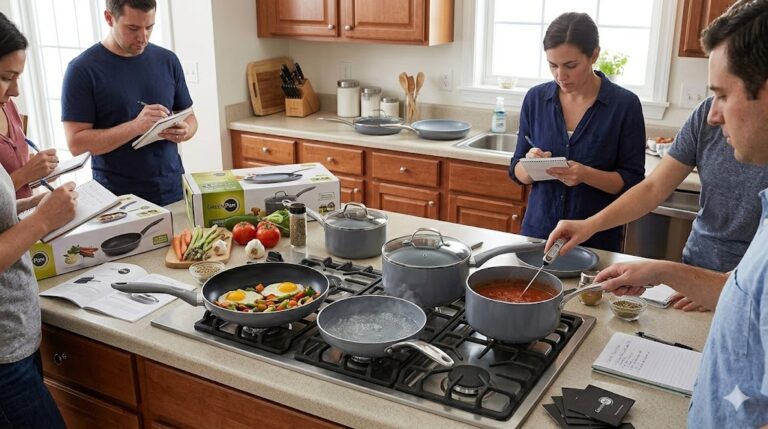
GreenPan feels more durable than most ceramic options.
I tested this by putting it in the dishwasher multiple times — around 10 cycles — and I didn’t notice major damage. That’s rare.
It also performs well on higher heat compared to other non-stick pans.
Pros:
- Durable ceramic coating
- Dishwasher safe
- Handles higher heat
Cons:
- Slightly expensive
See latest deals here:
4. All-Clad Stainless Steel – Best Long-Term Investment
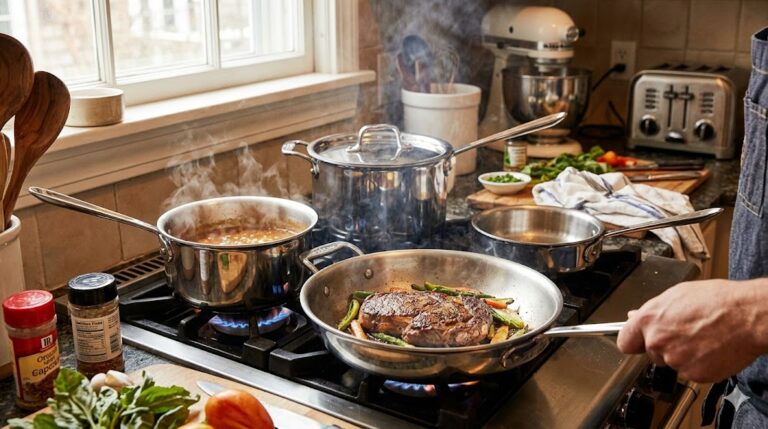
The first time I used it, food stuck. But after learning heat control, the results improved a lot.
If you want cookware that lasts years, this is a solid option.
Pros:
- Extremely durable
- No chemical coating
- Professional performance
Cons:
- Expensive
- Learning curve
Check availability here:
What I Rejected (And Why)
I also looked at T-fal cookware.
While it’s popular, I noticed the coating felt thinner. Long-term reviews also show faster wear, which is why I didn’t include it in this list.
Comparison Table
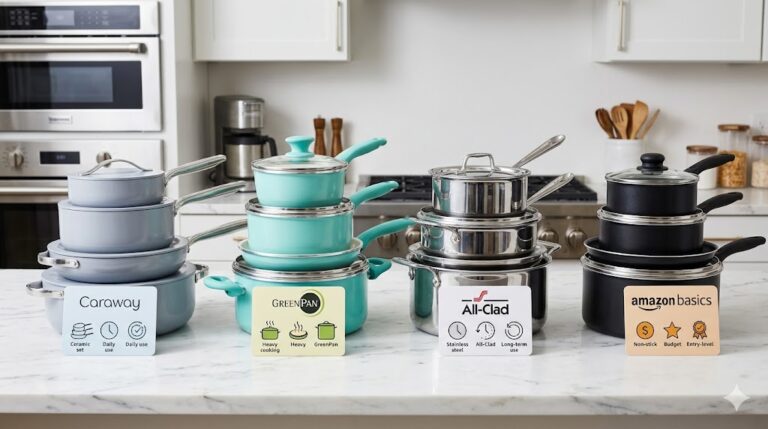
| Cookware | Type | Safety | Durability | Best For | My Take |
|---|---|---|---|---|---|
| Caraway | Ceramic | High | Medium | Daily use | Best overall |
| GreenPan | Ceramic | High | High | Heavy cooking | Most durable |
| All-Clad | Stainless | Very High | Very High | Long-term use | Pro-level option |
| Amazon Basics | Non-stick | Medium | Low | Budget users | Entry-level |
Still not sure which one to choose?
Maintenance Tips (Important)
I’ve seen people damage good cookware in weeks.
Never put a hot pan under cold water. I noticed slight warping after doing this once.
Always use wooden or silicone utensils.
Avoid high heat unless necessary.
Don’t stack pans without protection.
Small habits make a big difference.
Are Non-Stick Cookware Sets Safe?
If you’re looking for the best kitchenware for US households, safety matters.
Traditaional coatings can break down at high heat. That’s why many people now prefer ceramic or stainless steel options.
Helpful Guides
FAQs
1. Is non stick cookware safe?
Yes, if it’s good quality and used properly.
2. How long does it last?
Usually 2–4 years in my experience.
3. Can I use metal utensils?
No, it damages the coating.
4. Which is best for beginners?
T-fal or Amazon Basics.
5. Is ceramic better?
Safer, but needs more care.
Final Verdict
If you want the best non stick cookware set in USA, Caraway is the most balanced choice.
GreenPan is better for durability.
Amazon Basics works for budget setups.
All-Clad is ideal for long-term use.👉 Find the best deal for your preferred cookware here:
If You Want More
check this detailed guide,Before you buy:
https://homecartco.com/air-fryer-vs-oven/