
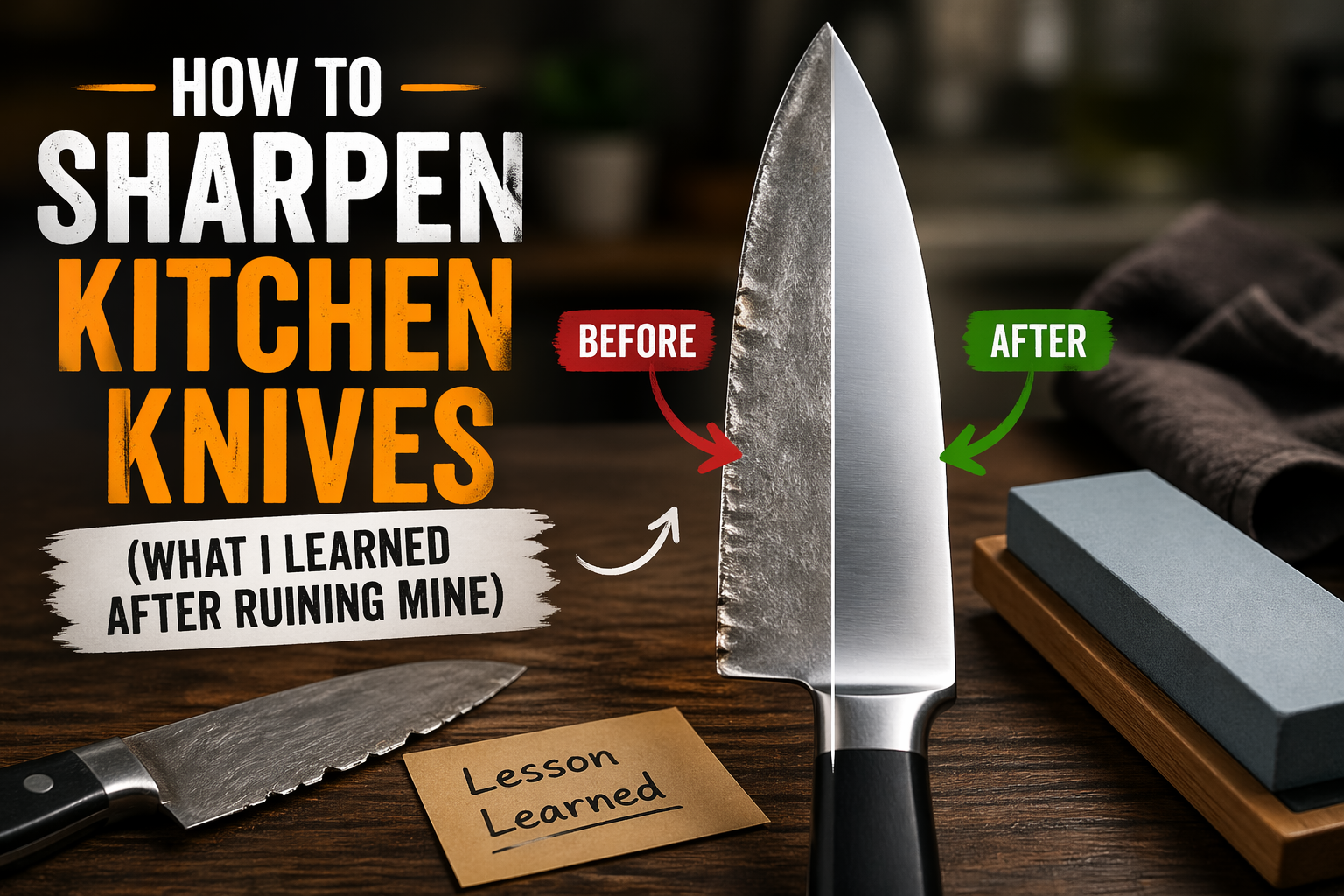
How to Sharpen Kitchen Knives at Home and Get Perfect Cuts
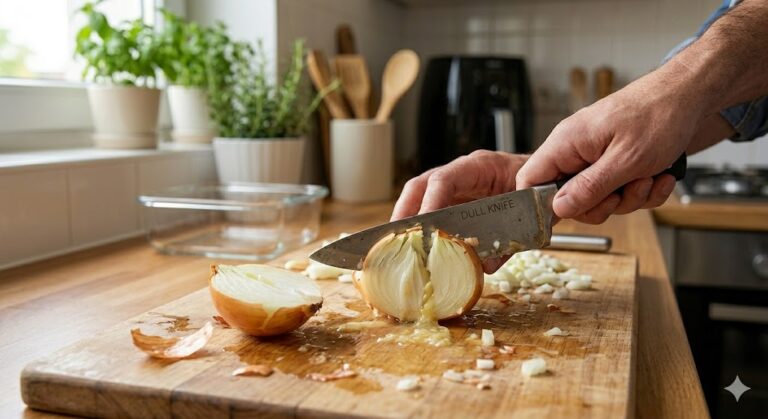
Last Sunday morning, I was cutting onions for breakfast. Nothing fancy. But the knife just wouldn’t cut.
Table of Contents
ToggleInstead of slicing, it kept slipping. I pressed harder… and honestly, that was a bad idea.
For a second, I actually felt the knife lose control slightly. That’s when I stopped.
Right there.
That day, I finally decided to learn how to sharpen kitchen knives properly instead of just ignoring the problem.
Why I Ignored This for So Long
I used to think sharpening knives was something only chefs worry about.
At home? Just buy a new one when it gets bad.
But after cooking regularly, I realized something simple—prep matters more than anything else.
And honestly, this became even clearer when I started experimenting with different cooking methods.
If you’ve ever compared cooking results in different appliances, like in my air fryer vs oven guide, you’ll notice preparation quality directly affects the outcome.
A dull knife:
- Slows you down
- Makes cooking frustrating
- And increases risk
The First Thing I Got Wrong
I had a honing rod and thought I was doing it right.
I wasn’t.
Honing doesn’t sharpen—it just maintains.
That’s when I started actually learning how to sharpen kitchen knives instead of guessing.
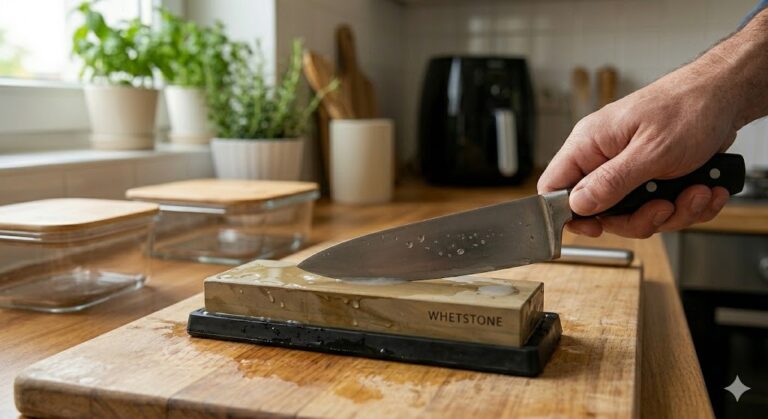
The Method That Finally Worked (Whetstone)
I avoided this at first. It looked complicated.
But once I tried it, it made sense.
- Soak the stone
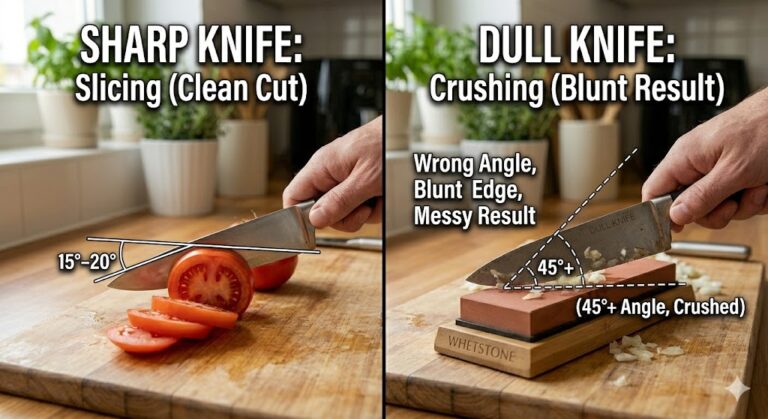
- Hold a steady angle
- Move the knife slowly
That’s it.
The first time felt awkward. But by the third try, the knife was cutting clean again.
Best Tool I Recommend (After Trying Both)
Whetstone Sharpening Kit
- Works on almost all kitchen knives
- Gives a proper sharp edge
- Long-term solution
I avoided this at first because it looked complicated. But once I tried it, I realized it’s actually the best way to sharpen a knife properly.
Want Something Easier?
Manual Knife Sharpener (Pull-Through)
- No skill needed
- Works in seconds
- Good for quick fixes
I’ve used this when I didn’t want to deal with technique. It’s not perfect, but it gets the job done fast.
Where Most People Mess Up
I made all of these mistakes.
Pressing Too Hard
Doesn’t help. Just damages the blade.
Wrong Angle
Consistency matters more than perfection.
Waiting Too Long
This was my biggest mistake.
I ignored it until the knife became useless.
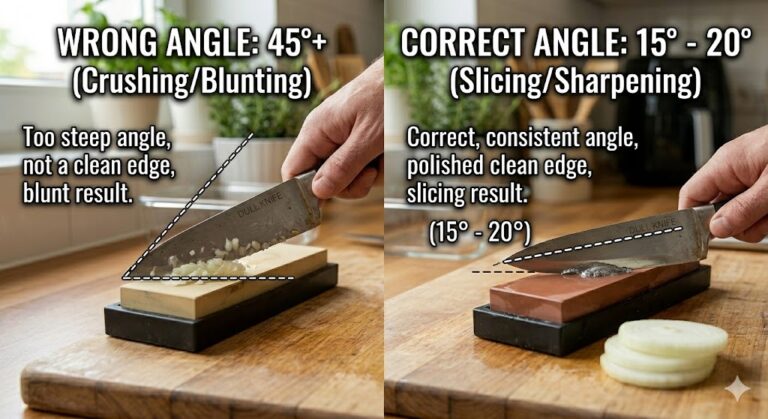
This is exactly where I used to struggle.
My knife wasn’t bad—it was just dull.
Once I started using the right sharpening tool, everything changed. Cooking became easier, and I stopped getting frustrated.
What I Use Now (Simple System)
Nothing complicated.
- Whetstone for sharpening
- Honing rod for maintenance
That’s it.
And this applies to most kitchen tools too—simple tools that actually work.
If you’re upgrading your kitchen tools overall, you’ll notice the same pattern—quality tools reduce effort, just like I explained in my guide on best wood for kitchen utensils.
A Small Change That Made a Big Difference
After I learned how to sharpen kitchen knives, cooking felt different.
Not dramatic. Just… easier.
Cutting vegetables stopped feeling like work.
And if you cook regularly, especially using appliances, you’ll understand why consistency matters.
I’ve talked about this in detail when explaining daily air fryer use and safety—small habits make a big difference over time.
Don’t Replace Your Knife Yet
Most people think they need a new knife.
You probably don’t.
In most cases, a simple sharpening tool can bring your knife back to life in minutes.
If your knife:
- Slips while cutting
- Feels blunt
- Needs too much force
Final Thoughts
I used to think my knife was the problem.
It wasn’t.
It was just dull.
Learning how to sharpen kitchen knives fixed that.
Before replacing your knife—try fixing it.
FAQs
How often should I sharpen my knife?
Every few weeks if you cook regularly.
Is a whetstone necessary?
Not necessary—but best for long-term results.
Can beginners do this?
Yes. Just takes a little practice.